
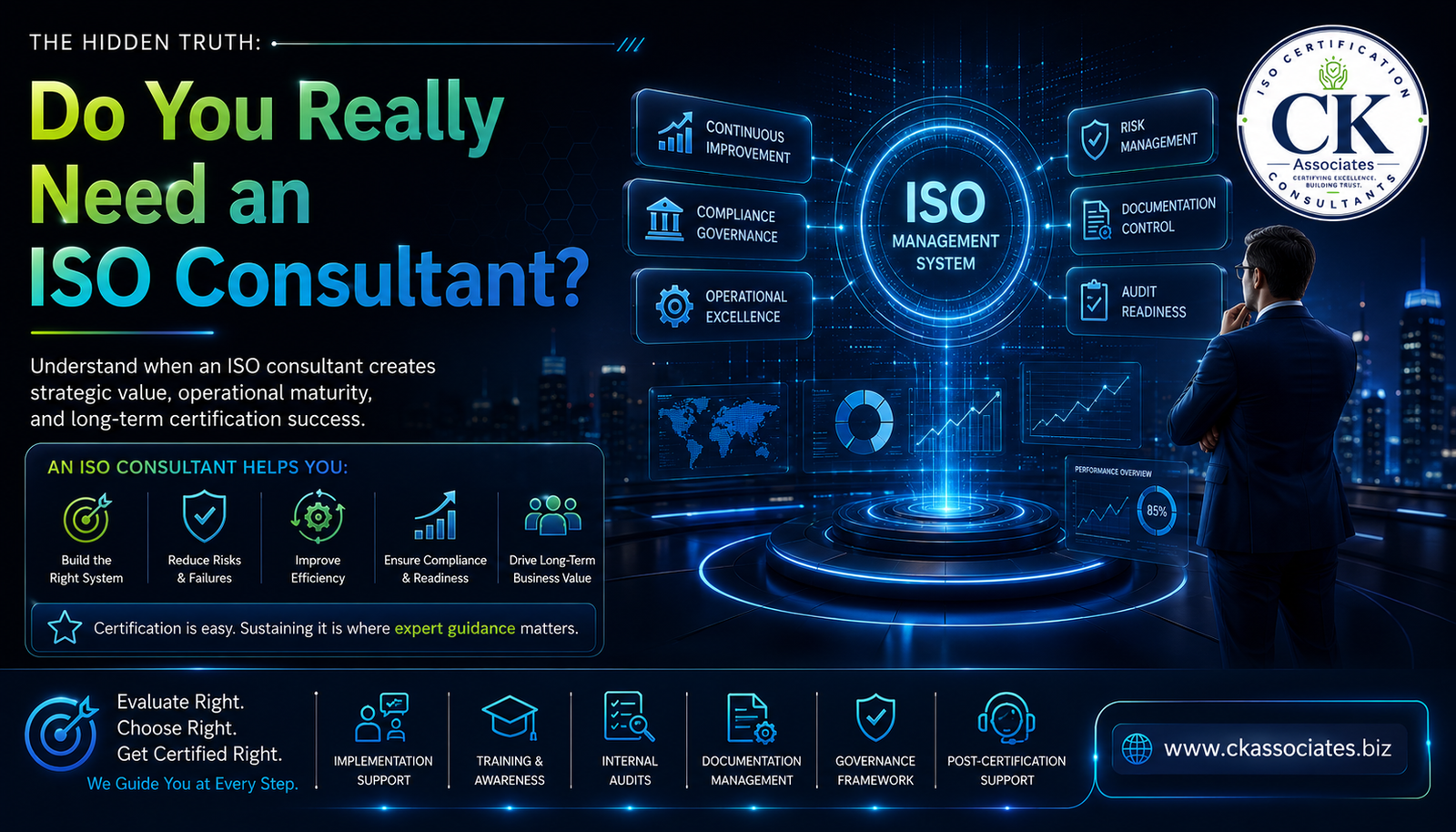
Do You Really Need an ISO Consultant?
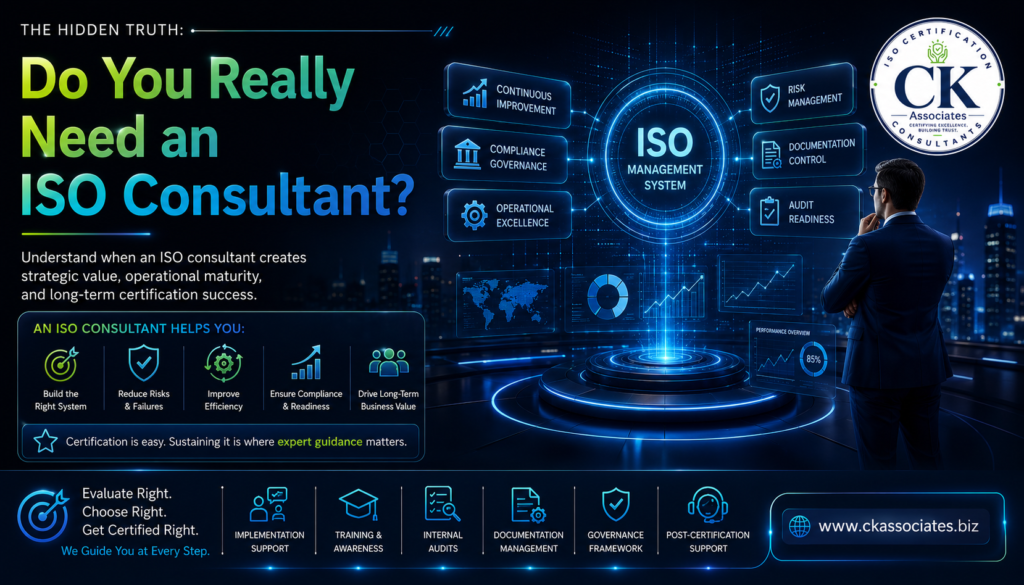
Businesses do not always legally require an ISO consultant for certification, but experienced ISO consultants significantly reduce implementation risks, save time, simplify compliance, improve audit readiness, and help organizations build sustainable management systems aligned with business goals.
Organizations with limited internal expertise, tight timelines, multiple compliance requirements, or complex operations usually benefit greatly from professional ISO consulting support.
Introduction
One of the most common questions businesses ask before starting ISO certification is:
“Do we really need an ISO consultant?”
The answer depends on:
- Internal expertise
- Business complexity
- Available resources
- Certification timelines
- Industry risks
- Compliance maturity
- Operational goals
Some businesses successfully implement ISO systems internally.
Others struggle for months due to poor planning, documentation confusion, failed audits, employee resistance, and operational disruption.
The real question is not whether ISO consultants are mandatory.
The real question is:
“Will expert guidance reduce risks, accelerate implementation, and improve long-term business outcomes?”
Quick Answer
When Do Businesses Need an ISO Consultant?
Businesses typically need an ISO consultant when they lack internal ISO expertise, require faster certification, operate in regulated industries, face customer compliance demands, or want a scalable and maintainable management system.
ISO consultants help reduce implementation errors, improve audit readiness, simplify documentation, and align compliance frameworks with business operations.
Do Businesses Really Need an ISO Consultant?
Businesses do not always legally require an ISO consultant for certification, but experienced consultants help reduce compliance risks, accelerate implementation, simplify documentation, improve audit readiness, and build sustainable ISO management systems aligned with business operations.
Organizations with limited internal expertise, tight deadlines, complex workflows, or customer compliance pressures usually benefit significantly from professional ISO consulting support.
Why Businesses Consider ISO Consultants
Businesses across Hyderabad, Telangana, Andhra Pradesh, and India increasingly pursue ISO certification for:
- Customer trust
- Tender eligibility
- Vendor qualification
- International business expansion
- Regulatory alignment
- Operational improvement
- Information security
- Risk management
- Brand credibility
However, many organizations underestimate:
- Documentation requirements
- Process mapping
- Risk assessments
- Internal audits
- Compliance monitoring
- Employee awareness
- Management review expectations
This is where professional ISO consultants provide strategic value.
Situations Where You Probably Need an ISO Consultant
1. No Internal ISO Experience
If your organization has never implemented:
- ISO 9001
- ISO 27001
- ISO 14001
- ISO 45001
- ISO 42001
- ISO 20000-1
Then external expertise can dramatically reduce confusion and delays.
Professional consultants understand:
- Standard interpretation
- Certification body expectations
- Documentation structures
- Audit preparation methods
- Implementation workflows
This reduces costly trial-and-error implementation.
2. Tight Certification Deadlines
Many businesses need certification urgently because of:
- Customer requirements
- Government tenders
- Investor expectations
- Contract eligibility
- Global client onboarding
ISO consultants help accelerate:
- GAP analysis
- Documentation
- Process alignment
- Internal audits
- Corrective actions
- Certification readiness
Without structured guidance, timelines often expand unnecessarily.
3. Complex Business Operations
Large or multi-department organizations usually require structured implementation support.
Examples include:
- Manufacturing companies
- IT companies
- SaaS businesses
- Hospitals
- Educational institutions
- Multi-location enterprises
Complex operations require:
- Cross-functional coordination
- Governance structures
- Risk mapping
- Process standardization
- Department accountability
ISO consultants simplify this transformation.
4. Limited Internal Resources
Many SMEs and growing businesses do not have dedicated compliance teams.
Management teams are already handling:
- Operations
- Finance
- Sales
- HR
- Customer management
Adding ISO implementation without expert support can overload teams.
Consultants reduce operational disruption.
5. Need for Sustainable Systems
Many businesses achieve certification but fail during surveillance audits.
This happens because the system was built only for certification.
Professional consultants help build:
- Sustainable frameworks
- Maintainable documentation
- Governance systems
- Employee adoption models
- Long-term compliance workflows
This creates lasting operational value.
Situations Where Businesses May Not Need an ISO Consultant
1. Strong Internal Compliance Expertise
If your organization already has:
- Experienced compliance professionals
- Internal auditors
- ISO-trained managers
- Mature governance systems
Then internal implementation may be possible.
2. Simple Operational Structure
Small organizations with:
- Limited processes
- Small teams
- Minimal compliance complexity
- Strong leadership involvement
May implement certain standards internally.
3. Long Implementation Timelines
If there is no urgency, businesses can invest time in:
- Learning standards
- Developing documentation
- Training employees
- Building internal expertise
However, this still requires substantial effort.
The Hidden Risks of DIY ISO Implementation
Risk 1: Misinterpreting Requirements
Many organizations misunderstand:
- Risk-based thinking
- Context analysis
- Interested parties
- Evidence requirements
- Internal audit expectations
This creates certification delays.
Risk 2: Overcomplicated Documentation
DIY implementations often create:
- Excessive procedures
- Duplicate forms
- Unnecessary registers
- Generic templates
This damages usability.
Risk 3: Failed Audits
Poor preparation can lead to:
- Major nonconformities
- Corrective action delays
- Certification postponement
- Customer confidence issues
Risk 4: Employee Resistance
Without proper change management:
- Employees avoid the system
- Awareness remains weak
- Process adoption fails
Consultants help improve organizational alignment.
Risk 5: Long-Term Sustainability Problems
Certification is only the beginning.
Maintaining compliance requires:
- Monitoring
- Reviews
- Internal audits
- Improvements
- Leadership involvement
Weak systems eventually collapse.
The Business Value of Professional ISO Consultants
Faster Implementation
Experienced consultants reduce delays.
Better Audit Readiness
They understand certification expectations.
Reduced Risk
They identify compliance gaps early.
Operational Alignment
Good consultants integrate ISO into real workflows.
Governance Improvement
Modern ISO systems strengthen business maturity.
Long-Term Support
Professional consultants support sustainability beyond certification.
What Businesses Should Ask Before Hiring an ISO Consultant
Important Questions
Have you worked with businesses in our industry?
How do you simplify documentation?
Will the system be customized?
Do you provide post-certification support?
How do you train employees?
What is your implementation methodology?
Can you help with surveillance audits?
How do you ensure sustainability?
These questions help identify credible consultants.
The CK Associates Approach
At CK Associates, the focus is not only certification.
The objective is helping organizations build:
- Practical systems
- Sustainable governance
- Scalable compliance frameworks
- Operational maturity
- Long-term business resilience
We help businesses across Hyderabad and India implement ISO frameworks that improve operations — not just pass audits.
Why Hyderabad Businesses Are Increasingly Seeking ISO Consultants
Businesses in Hyderabad are experiencing growing pressure from:
- International clients
- Vendor qualification programs
- Information security expectations
- Operational governance requirements
- Global compliance standards
This makes professional implementation guidance increasingly valuable.
Do small businesses need ISO consultants?
Can businesses get ISO certified without consultants?
Is hiring an ISO consultant worth it?
What does an ISO consultant actually do?
How much does an ISO consultant help?
Why do companies fail ISO audits?
How long does ISO implementation take?
FAQ Section
Can I get ISO certified without a consultant?
Yes. Businesses can implement ISO systems internally, but professional consultants often reduce risks, save time, and improve long-term success.
Are ISO consultants mandatory?
No. ISO standards do not legally require consultants. However, consultants simplify implementation and improve audit readiness.
Why do businesses hire ISO consultants?
Businesses hire consultants for expertise, faster implementation, risk reduction, operational alignment, and long-term sustainability.
Do ISO consultants guarantee certification?
No ethical consultant should guarantee certification because final approval depends on certification body auditors.
Is DIY ISO implementation risky?
It can be. Many businesses struggle with documentation, compliance interpretation, audit readiness, and employee adoption without expert support.